Civil Infrastructure Contractor — Auckland
Updated: Sep 4
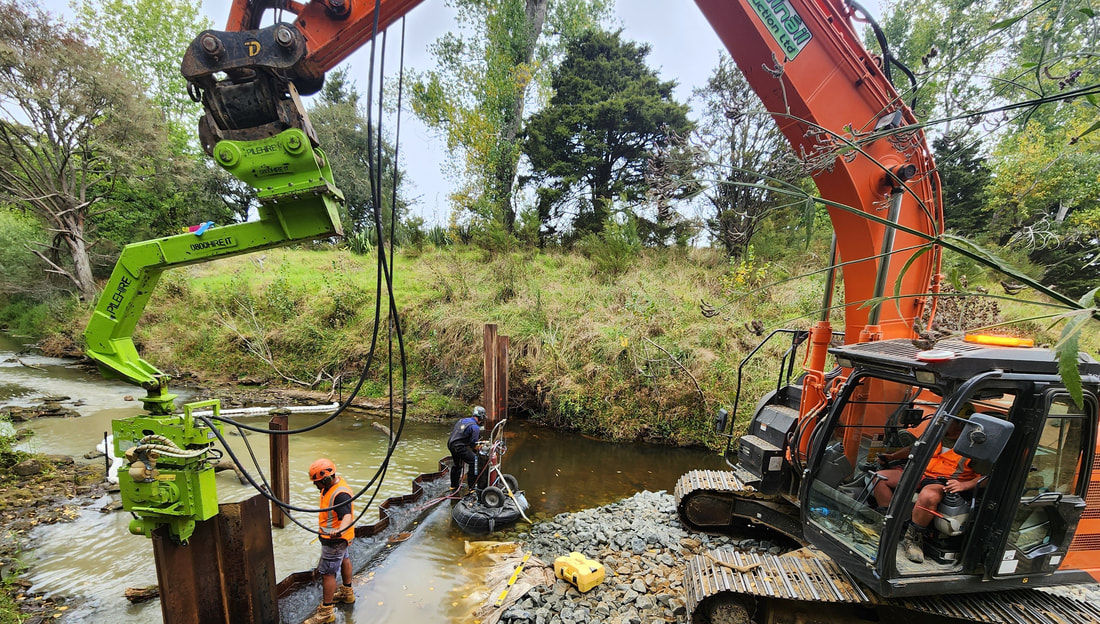
Draeinail Construction has spent about twenty years putting civil infrastructure in the ground across South Auckland and the wider region. We are a civil and drainage contractor based in Pukekohe, in the heart of Franklin, and we run a permanent crew in Queenstown as well. Around twenty-five people work here, registered drainlayers among them, and the plant fleet is sized to match the work: eleven excavators from five to thirty-five tonne, three JCB telehandlers, an articulated transporter rated to twenty-five tonne, a hydro-vac, plus the trucks, trailers, pumps and shoring that real civil work demands.
That scale matters because of who we work for. We hold public sewer scope on Penlink for Fulton Hogan, enabling works at Tauriko for Downer, and stormwater upgrades for TRS at Paerata Station and the Wiri EMU depot. We carry out energy civils subcontracted to Ventia and across Vector's programme, and we have delivered on a Spark data centre upgrade in Takanini, a Ryman detention tank, and subdivision works for TDM at Hobsonville. Head contractors and tier-one principals don't hand that work to anyone who can't prove competence, safety and delivery.
This page is for the developers, builders, project managers and head contractors who need a civil partner that turns up with the right gear, the right tickets and crews who know what they are doing underground. Here's how we work, what we cover, and why the operators on our books make the difference between a programme that holds and one that slips.
What a civil infrastructure contractor actually does
Civil infrastructure is the buried and bulk work that everything else sits on top of. It's the gravity and pressure pipework, the chambers and manholes, the detention and attenuation, the trenching for power and comms, and the earthworks and platforms that get a site to a level where vertical construction can start. Get it wrong and you don't find out until a downstream connection fails or a wet-weather event overwhelms a system that was never built to spec. Get it right and nobody notices, which is exactly the point.
We work across four sectors, and the crews move between them depending on the programme.

Infrastructure
Bulk earthworks, roading civils, three-waters mains, chambers and connections to the public network. This is the work that needs traffic management, dewatering and shoring as a matter of course, and it's where our larger excavators and the articulated transporter earn their keep. The Penlink sewer for Fulton Hogan and the Tauriko enabling works for Downer both sit here: large-scale, programme-critical, delivered to a principal's standards.
Drainage
This is our foundation. Registered drainlayers, gravity and pressure systems, stormwater and wastewater reticulation, soakage, and the detention and attenuation structures that consent conditions increasingly demand. The Ryman detention tank and the TRS stormwater upgrades at Paerata Station and the Wiri EMU depot are the kind of drainage work we're built for: tight tolerances, real consequences if the falls are wrong, and inspection at every stage.
Subdivision
Greenfield and infill subdivision civils, from the road corridor and the three-waters reticulation through to lot connections and the works that get a section to title. The TDM works at Hobsonville are a good example, and Franklin and the southern growth corridor keep this work steady. Developers care about two things here: certainty on programme and clean as-builts that don't hold up sign-off. We deliver both.
Energy
Cable trenching, ducting, chambers, foundations and reinstatement for the electricity network. We subcontract energy civils to Ventia and work across Vector's programme, and the Spark data centre upgrade in Takanini drew on the same capability. Energy work lives and dies on coordination with the asset owner and on getting reinstatement right the first time, because nobody wants to dig the same trench twice.
The plant and the people behind the work
You can't deliver tier-one civil work on hired-in gear and casual labour. The plant has to be there when the programme says it should be, and the operator has to know the machine and the job. We own our fleet for that reason.
On the iron, that's:
Eleven excavators spanning five to thirty-five tonne, so we can match the machine to the trench rather than forcing one size onto every task
Three JCB telehandlers for materials handling, pipe and chamber placement, and shoring
An articulated transporter rated to twenty-five tonne for shifting plant and bulk material on and off site
A hydro-vac for safe, non-destructive excavation around live services
Bypass and dewatering pumps to keep trenches and connections workable
Trench and manhole shields so crews work to confined-space and excavation rules, not around them
Trucks, trailers and our own traffic management capability
Owning the hydro-vac and the shoring isn't a luxury. When you're excavating next to a live Vector cable or an in-service sewer, the difference between a hydro-vac potholing operation and a machine bucket is the difference between a clean dig and a service strike with a notifiable event attached. Crews that have the right tool reach for it. Crews scrambling for hired plant cut corners.
The people side is registered drainlayers leading drainage scope, Site Safe trained crews, and operators competency-assessed to the Construction Safety Council Tier 1 framework. Confined space, first aid, traffic control and the driver endorsements are all current, and every task runs to a documented safe operating procedure. We run a custom health and safety system because the off-the-shelf packages don't map cleanly onto the way civil crews actually work in a trench.
The contractors who hold tier-one scope aren't the cheapest on the day. They're the ones whose plant turns up on time, whose drainlayers are registered, and whose as-builts pass the first inspection. That's what keeps a programme on track, and it's what gets you invited back.
How safety and compliance are built into delivery
On a principal's site, safety isn't a folder you produce at the prestart. It's competency-assessed crews, current tickets, and a system that proves the work was done the way the method statement said it would be. We're set up so that the paperwork and the practice line up.
Our framework covers the things head contractors and principals audit hardest:
Site Safe training and crews competency-assessed to the Construction Safety Council Tier 1 framework
Confined-space certification for chamber, manhole and tank work
First aid, traffic control and driver endorsements kept current across the team
Documented safe operating procedures for excavation, lifting, shoring and service location
Our own traffic management, so a TMP doesn't sit on the critical path waiting for a subcontractor
A custom health and safety system tailored to civil and drainage work, not generic construction
Confined space and excavation are where civil work hurts people when it's done badly. Manhole and tank entry, deep trenching, and work around live services all carry real risk, and we treat the shields, the gas monitoring and the rescue planning as part of the job rather than an add-on. The point of competency assessment to a recognised framework is simple: a principal can audit us against a standard they already know, and we pass.
Where we work, and why local depth matters
Civil work is local work. Knowing the ground, the network, the consenting context and the council's drainage standards saves real time, and that knowledge only comes from putting pipe in the ground in the same patch year after year.
Our core ground is South Auckland and Franklin: Pukekohe, Papakura, Takanini, Drury, Karaka, Paerata, Pokeno, Manukau and Wiri. We work north and west too, across Hobsonville, Whangaparaoa, Silverdale, Kumeu and Riverhead. And the permanent Queenstown crew means we hold real capability in the South Island, not a fly-in arrangement that evaporates when the work gets hard.
The southern growth corridor, from Drury through Paerata to Pokeno, is where a lot of the region's subdivision and three-waters work is happening, and it's ground we know well. When a developer in Karaka or a head contractor in Wiri needs a civil crew that already understands the local network and can mobilise without a long ramp-up, that's a programme advantage worth having.
Working with us on your project
Whether you're a developer staging a subdivision, a builder who needs the drainage and connections sorted before slab, or a head contractor carving out a civil package, the process is the same. We scope it properly, resource it from our own fleet and crews, and deliver to the standard your principal or your council inspector expects.
Scope and site review: we look at the drawings, the consent conditions and the ground, and tell you straight what the work involves and where the risk sits
Programme and resourcing: we confirm the plant, the crews and the sequencing, and slot the package into your wider programme
Delivery: registered drainlayers and competency-assessed operators do the work to documented procedures, with our own traffic management and dewatering in support
Inspection and as-builts: we hold the work for inspection at the right stages and hand over clean as-builts that don't stall your sign-off
We're comfortable working under a tier-one head contractor, alongside other trades, or directly for a developer who wants one civil partner for the whole package. The reference projects speak to both: principal-led scope for Fulton Hogan, Downer and TRS, and direct subdivision delivery for developers like TDM.
Frequently asked questions
Are your drainlayers registered?
Yes. Registered drainlayers lead our drainage and three-waters scope, which is what councils and principals require for connections to the public network and for work that has to pass inspection. Registration isn't optional on this kind of work, and we don't treat it as if it is.
Can you work as a subcontractor under a tier-one head contractor?
That's a large part of what we do. We hold public sewer scope on Penlink for Fulton Hogan, enabling works at Tauriko for Downer, and stormwater upgrades for TRS, and we deliver energy civils to Ventia and across Vector's programme. Our crews are competency-assessed to the Construction Safety Council Tier 1 framework, so a principal can audit us against a standard they already use.
Do you own your plant, or is it hired in?
We own our fleet. Eleven excavators from five to thirty-five tonne, three JCB telehandlers, an articulated transporter to twenty-five tonne, a hydro-vac, plus pumps, shoring, trucks and trailers. Owning the gear means it's available when your programme needs it, and the operators know the machines they're running.

What areas do you cover?
Our core ground is South Auckland and Franklin: Pukekohe, Papakura, Takanini, Drury, Karaka, Paerata, Pokeno, Manukau and Wiri. We also work across Hobsonville, Whangaparaoa, Silverdale, Kumeu and Riverhead, and we run a permanent crew in Queenstown for South Island work.
Can you handle traffic management and dewatering, or do we arrange those separately?
We bring our own. Traffic management is in-house, so a TMP doesn't sit on the critical path waiting for a subcontractor, and we carry bypass and dewatering pumps as standard. That's one less interface for you to coordinate and one less thing that can slip.
If you've got a civil or drainage package coming up and you want a contractor who turns up with the right plant, the right tickets and crews who know the ground, let's talk. Request a quote or call Darryn Muir on 021 271 0035.


